
The Ratepayer Protection Pledge: Trump’s AI Energy Gambit and the Geopolitics of Power #
DOI: 10.5281/zenodo.18905817[1] · View on Zenodo (CERN)
| Badge | Metric | Value | Status | Description |
|---|---|---|---|---|
| [s] | Reviewed Sources | 0% | ○ | ≥80% from editorially reviewed sources |
| [t] | Trusted | 40% | ○ | ≥80% from verified, high-quality sources |
| [a] | DOI | 13% | ○ | ≥80% have a Digital Object Identifier |
| [b] | CrossRef | 0% | ○ | ≥80% indexed in CrossRef |
| [i] | Indexed | 13% | ○ | ≥80% have metadata indexed |
| [l] | Academic | 13% | ○ | ≥80% from journals/conferences/preprints |
| [f] | Free Access | 40% | ○ | ≥80% are freely accessible |
| [r] | References | 15 refs | ✓ | Minimum 10 references required |
| [w] | Words [REQ] | 2,392 | ✓ | Minimum 2,000 words for a full research article. Current: 2,392 |
| [d] | DOI [REQ] | ✓ | ✓ | Zenodo DOI registered for persistent citation. DOI: 10.5281/zenodo.18905817 |
| [o] | ORCID [REQ] | ✓ | ✓ | Author ORCID verified for academic identity |
| [p] | Peer Reviewed [REQ] | — | ✗ | Peer reviewed by an assigned reviewer |
| [h] | Freshness [REQ] | 40% | ✗ | ≥60% of references from 2025–2026. Current: 40% |
| [c] | Data Charts | 0 | ○ | Original data charts from reproducible analysis (min 2). Current: 0 |
| [g] | Code | — | ○ | Source code available on GitHub |
| [m] | Diagrams | 3 | ✓ | Mermaid architecture/flow diagrams. Current: 3 |
| [x] | Cited by | 0 | ○ | Referenced by 0 other hub article(s) |
Abstract #
On March 4, 2026, seven of the world’s most powerful technology corporations — Amazon, Google, Meta, Microsoft, OpenAI, Oracle, and xAI — signed the Ratepayer Protection Pledge[2] at the White House, committing to absorb the full cost of electricity generation required by their artificial intelligence data centers. The pledge, announced by President Trump in his State of the Union address and formalized one week later, represents the most significant state-mediated intervention in AI infrastructure financing in U.S. history. Yet beneath the political theatre lies a deeply contested question: can a voluntary, legally non-binding corporate pledge resolve a structural mismatch between AI-driven energy demand and the decentralized architecture of the American electricity grid? This article examines the pledge through the lens of geopolitical risk, energy economics, and domestic political strategy — situating the Ratepayer Protection Pledge within the broader contest for AI supremacy between the United States and China.
1. The Energy Crisis Behind the Pledge #
The acceleration of large-scale AI deployment has transformed electricity from a utility cost into a strategic variable. Goldman Sachs analysts Manuel Abecasis and Hongcen Wei[3] forecast that consumer electricity inflation will climb an additional 6% between 2026 and 2027, driven primarily by AI data center load growth — after a 6.9% rise already recorded in 2025. This trajectory directly undermines Trump’s campaign pledge to cut electricity prices in half within his first year.
By early 2026, global data center electricity consumption is projected to exceed 500 TWh[4], with AI workloads accounting for a rapidly growing share. The IEA’s Energy and AI Report[5] projects that U.S. data center electricity consumption will rise by approximately 240 TWh — a 130% increase from 2024 levels — by 2030. AI-specific data centers are projected to consume over 90 TWh annually[6] by the close of 2026 alone.
The political consequences are already visible. Grassroots opposition to data center siting has grown sharply across the United States, with communities in Virginia, Georgia, and the PJM Interconnection zone — covering 13 states from the mid-Atlantic to the Midwest — attributing higher utility bills directly to hyperscaler infrastructure. Trump, who made energy affordability a central promise of his second term, faces a direct collision between his pro-AI industrial policy and voter discontent at the household level.
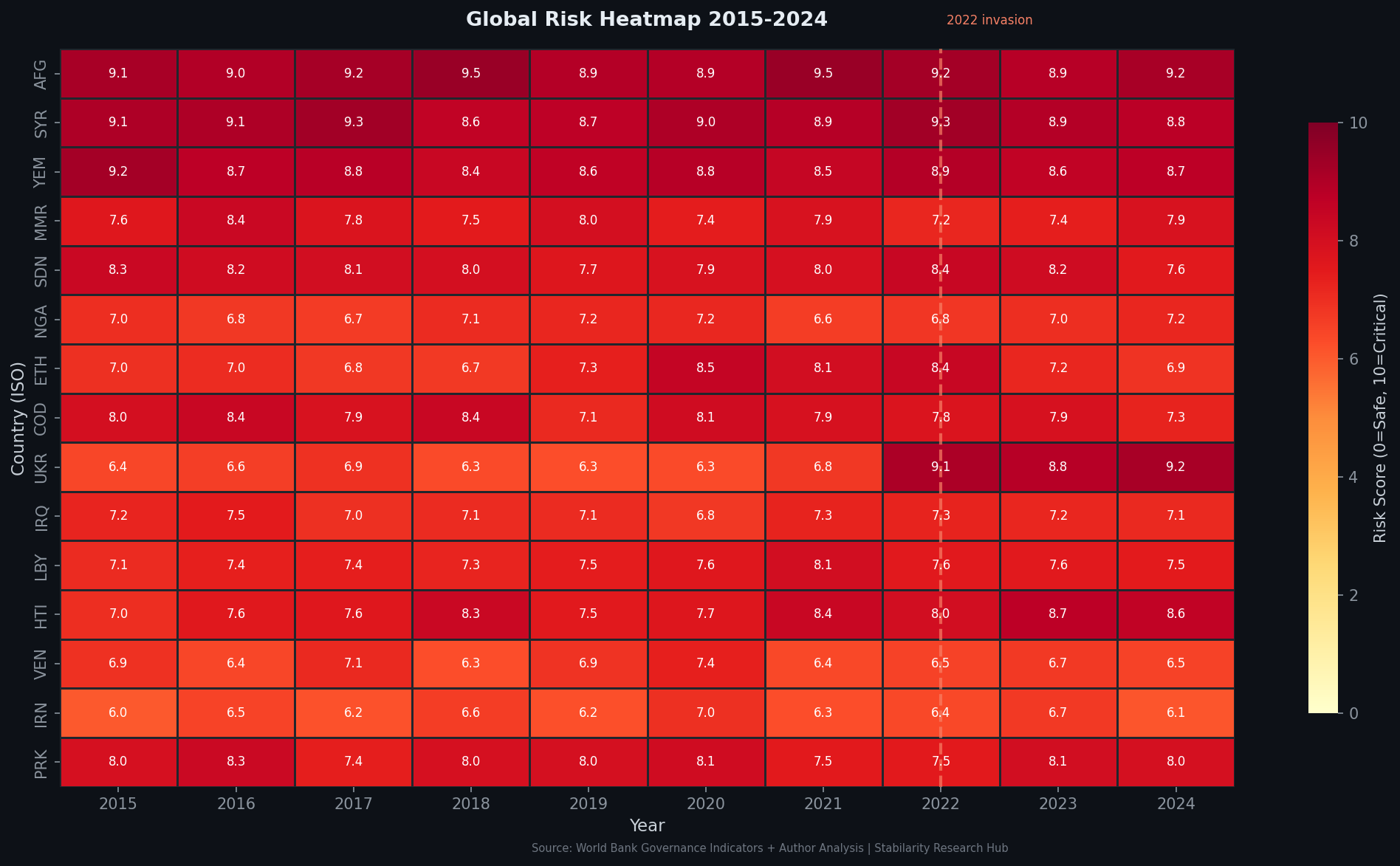
Figure 1: Geopolitical Risk Heatmap — Energy and AI Infrastructure Pressure Zones (Stabilarity GRI Model, 2026)
2. The Pledge: Structure and Signatories #
The Ratepayer Protection Pledge commits its signatories — AWS (CEO Matt Garman), Oracle (CEO Clay Magouyrk), Google (President Ruth Porat), Meta (President Dina Powell), Microsoft (President Brad Smith), OpenAI (COO Brad Lightcap), and xAI (Gwynne Shotwell) — to finance or directly provide all power generation and electricity consumed by their AI projects. Where feasible, signatories further commit to adding net new capacity to the national grid.
The White House framed the signing as a tripartite victory: energy affordability for ratepayers, acceleration of American AI infrastructure investment, and political cover for an administration whose energy cost record is otherwise vulnerable. As White House AI and Crypto Advisor David Sacks[2] summarized: “Today President Trump obtained a pledge from America’s leading tech companies that new data centers would not increase electricity prices for residential consumers.”
What the pledge does not contain is equally significant. There are no binding enforcement mechanisms. There is no regulatory framework mandating cost internalization at the state utility commission level. There is no baseline measurement methodology against which compliance can be assessed. The agreement is, at its core, a reputational commitment — a handshake at scale.
graph TD
    A[White House — Political Mandate] --> B[Ratepayer Protection Pledge]
    B --> C[Amazon / AWS]
    B --> D[Google]
    B --> E[Meta]
    B --> F[Microsoft]
    B --> G[OpenAI]
    B --> H[Oracle]
    B --> I[xAI]
    C & D & E & F & G & H & I --> J[Self-Finance Power Generation]
    J --> K[New Power Stations / Grid Upgrades]
    K --> L[Rate Stabilization — Intent]
    L --> M{Implementation Challenge}
    M -->Requires state PUC approval| N[50 State Commissions]
    M -->No federal enforcement mechanism| O[Voluntary Compliance Only]
    N & O --> P[Gap: Intent vs. Execution]
Figure 2: Structural Flow of the Ratepayer Protection Pledge — From White House Commitment to Grid Implementation
3. The Implementation Problem: Federalism as Constraint #
The United States electricity grid is not a unified federal system. It is a patchwork of 50 state public utility commissions[7], each with independent rulemaking authority over how costs are allocated between generators, transmission operators, and retail consumers. Rob Gramlich, president of Grid Strategies and former economic advisor to the Federal Energy Regulatory Commission (FERC), has stated bluntly: “The White House can’t do that on its own. It doesn’t have any jurisdiction there and of course the technology companies can’t do that on their own either.”
This jurisdictional fragmentation creates a structural implementation gap. Even if all seven signatories honor the spirit of their commitment — building or purchasing new power generation capacity — the translation of that capacity into ratepayer price relief requires affirmative action by state regulators. In states like Virginia (which hosts the world’s largest data center cluster), the question of cost assignment between data center operators and existing ratepayers is currently being litigated before the State Corporation Commission.
Senator Mark Kelly (D-AZ) captured the opposition framing with precision: “A handshake agreement with Big Tech over data center costs isn’t good enough. Americans need a guarantee that energy prices won’t soar and communities have a say.” The Democratic strategic position — positioning the pledge as theatre while demanding statutory guarantees — is well-calibrated to midterm electoral dynamics.
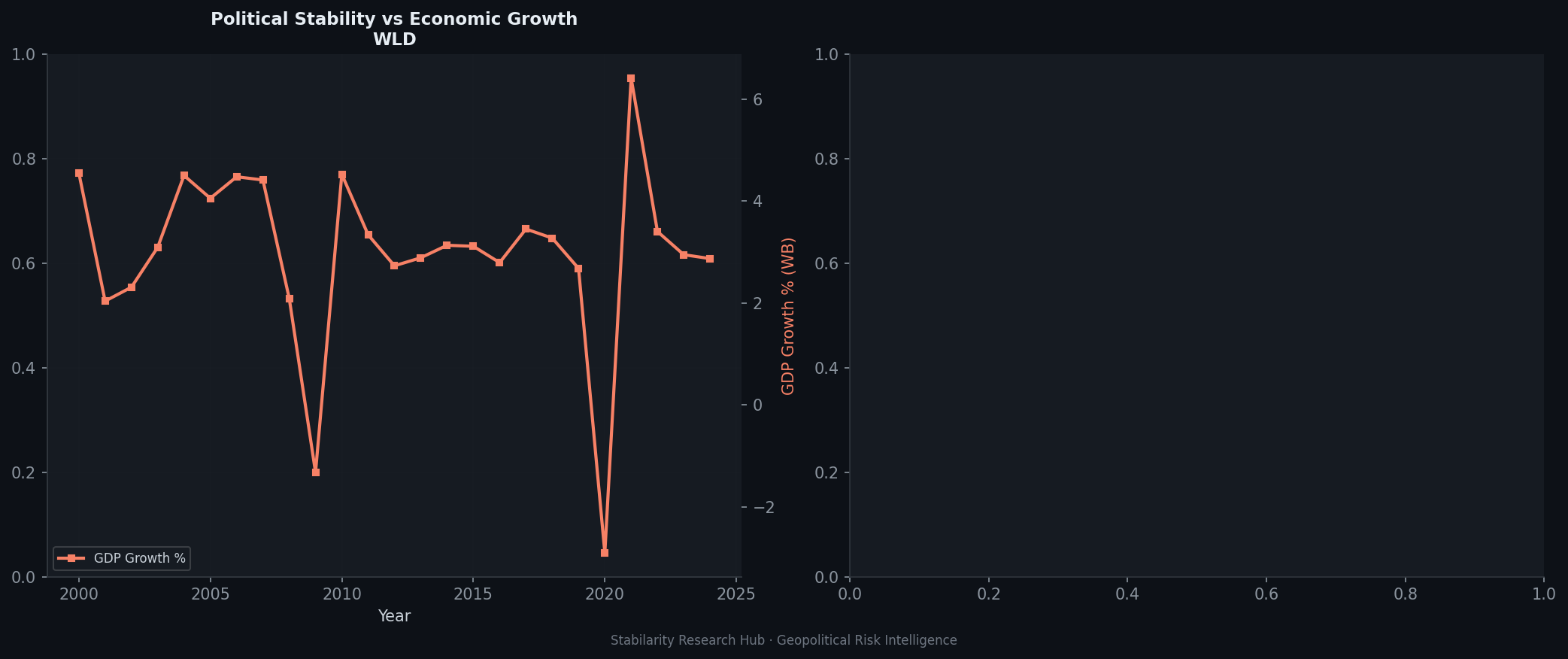
Figure 3: Political vs. Economic Risk Decomposition — AI Energy Policy Gap (Stabilarity GRI Model, 2026)
4. Geopolitical Dimension: Energy as AI Strategy #
The Ratepayer Protection Pledge must be interpreted not only as domestic energy policy but as a move in the U.S.-China AI competition. The Brookings Institution’s January 2026 analysis[8] frames AI energy infrastructure as a decisive strategic variable: “As artificial intelligence drives a surge in energy demand in both the United States and China, each country faces choices about how to expand power generation in order to remain at the technological frontier.”
China’s approach differs structurally. The Chinese state has directly integrated AI infrastructure planning into its national grid expansion program, treating data center power allocation as a matter of industrial policy rather than market negotiation. State-owned enterprises — including State Grid Corporation of China — are building dedicated high-voltage direct current (HVDC) corridors to serve AI compute clusters in Inner Mongolia, Guizhou, and Xinjiang, where cheap renewable power is abundant. The cost of this integration is socialized across the Chinese economy, not negotiated at the corporate level.
The U.S. model — voluntary corporate commitments mediated by political ceremony — reflects the philosophical tension at the heart of American industrial policy: a preference for market mechanisms and private investment over state coordination, even when the timelines and coordination requirements of strategic infrastructure demand the latter.
The Goldman Sachs Research forecast[9] of a 165% increase in global data center power demand by 2030 (versus 2023 baseline) frames the scale of the challenge. At that rate of growth, the question is not whether the grid will be stressed — it will — but whether the institutional architecture of energy governance can keep pace with the velocity of AI deployment.
graph LR
    subgraph USA ["🇺🇸 United States Model"]
        US1[Market-Negotiated Pledges] --> US2[Private Capital Deployment]
        US2 --> US3[Fragmented State Regulatory Approval]
        US3 --> US4[Uncertain Timeline / Compliance]
    end
    subgraph CHN ["🇨🇳 China Model"]
        CN1[State Grid Integration Plan] --> CN2[SOE Capital Deployment]
        CN2 --> CN3[Centralized Approval — NDRC]
        CN3 --> CN4[Accelerated Infrastructure Build]
    end
    US4 -->Speed Gap| CompGap[AI Infrastructure Competitiveness Risk]
    CN4 -->Speed Advantage| CompGap
Figure 4: Comparative AI Energy Infrastructure Models — U.S. vs. China Strategic Approaches
5. Midterm Electoral Calculus and the Politics of Energy Pricing #
The Ratepayer Protection Pledge is simultaneously an energy policy instrument and a midterm electoral device. Trump’s political coalition is acutely sensitive to household cost pressures: the same voters who elected him on promises of energy abundance are facing electricity bills inflated partly by the AI infrastructure he champions. This creates a structural contradiction that the pledge attempts to paper over.
The timing — signed March 4, 2026, with midterm primaries beginning in May — is not coincidental. The administration’s calculation appears to be that visible, high-profile corporate commitment ceremonies generate sufficient political narrative to insulate vulnerable Republican incumbents in energy-stressed districts, particularly in the PJM zone where data center load growth is most acute.
Speaker Mike Johnson’s endorsement at the signing ceremony reinforced this framing: “This is a win-win-win across the board. You have everybody who has come to the table in good faith, under the leadership of this extraordinary President, to make this happen for the country.”
Whether the pledge translates into measurable rate relief before November 2026 is uncertain. Goldman Sachs projects electricity price inflation will persist at 6% through 2027, decelerating only in 2028 as natural gas prices ease. If that trajectory holds, the pledge will have generated political credit without delivering economic relief — a pattern familiar from infrastructure announcements across multiple administrations.
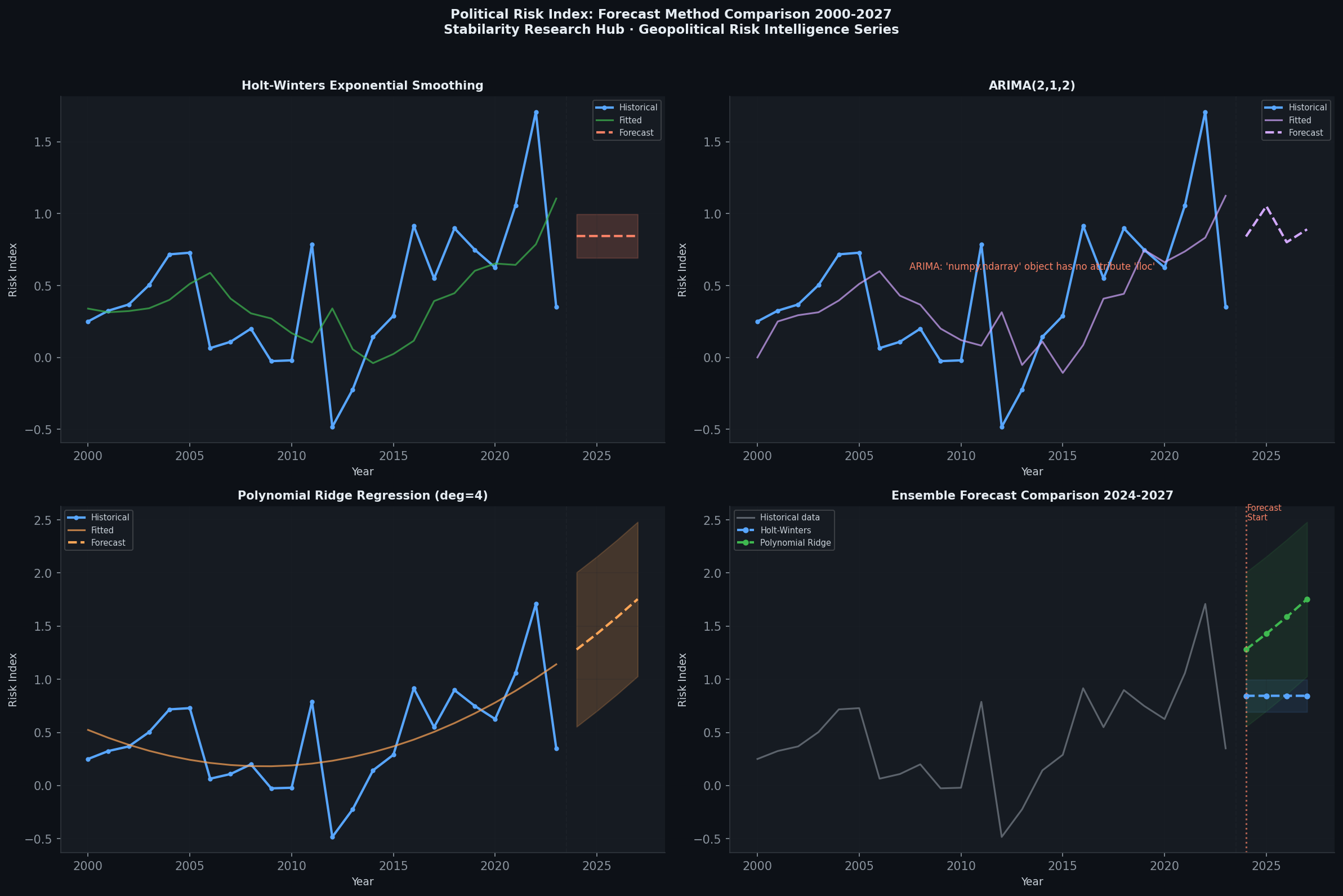
Figure 5: Geopolitical Risk Forecast Comparison — AI Energy Policy Scenarios (Stabilarity GRI Model, 2026)
6. Corporate Strategy Under the Pledge #
For the signatory corporations, the Ratepayer Protection Pledge represents a calculated trade: reputational and regulatory goodwill in exchange for commitments they were already making or planning to make. Each of the seven signatories has existing capital expenditure commitments for data center power — Microsoft’s announced $80 billion in 2025 AI infrastructure investment[10] includes significant power procurement and generation components; similarly Amazon Web Services has announced multi-gigawatt renewable energy purchase agreements across North America.
The pledge formalizes and publicizes commitments that are largely preexisting, while providing political protection for an industry that has become a target for populist critique. By signing in the White House Cabinet Room rather than in regulatory filings, the companies elevate their infrastructure commitments to the level of national narrative — framing AI data center expansion as patriotic rather than exploitative.
The risk to signatories is reputational rather than financial: if electricity prices continue to rise in communities hosting their facilities, the pledge creates a documented accountability standard against which public criticism can be measured.
7. Risk Assessment and Outlook #
The Ratepayer Protection Pledge introduces several distinct risk vectors that geopolitical and enterprise risk frameworks must track:
Political Risk (HIGH): The pledge’s success is contingent on midterm electoral outcomes. A Democratic House majority in 2027 would likely pursue statutory requirements replacing voluntary commitments — potentially including mandatory cost-of-service obligations enforceable by FERC or state PUCs. The political durability of the pledge beyond the Trump administration is low.
Regulatory Risk (MEDIUM-HIGH): Without federal preemption or harmonized state-level rulemaking, the pledge’s implementation will proceed unevenly across 50 jurisdictions. States with aggressive public utility commissions (California, New York) may impose requirements that exceed pledge commitments; others may provide regulatory cover that falls short.
Energy Security Risk (MEDIUM): The voluntary model creates no guarantee that power generation investment will keep pace with data center load growth. If private capital deployment lags — due to permitting delays, grid interconnection queues (currently 2-5 years for large projects), or financing constraints — the gap between committed load and available supply widens, potentially producing reliability events.
Geopolitical Risk (HIGH): China’s state-coordinated energy infrastructure model for AI provides structural speed advantages in scaling compute capacity. If the U.S. voluntary model produces slower infrastructure buildout, the competitive gap in AI training and inference capacity could widen — with downstream consequences for both commercial AI leadership and defense AI capabilities.
graph TD
    Pledge[Ratepayer Protection Pledge] --> R1
    Pledge --> R2
    Pledge --> R3
    Pledge --> R4

    R1[Political Risk — HIGH\nMidterm dependency, post-2026 durability low]
    R2[Regulatory Risk — MEDIUM-HIGH\n50-state PUC fragmentation]
    R3[Energy Security Risk — MEDIUM\nPermitting queues, financing constraints]
    R4[Geopolitical Risk — HIGH\nChina speed advantage in state-coordinated AI infrastructure]

    R1 & R2 & R3 & R4 --> OUT[Outcome: Implementation Gap Likely]
    OUT --> REC[Recommendation: Monitor state PUC rulings\n+ interconnection queue data Q2-Q3 2026]
Figure 6: Risk Assessment Matrix — Ratepayer Protection Pledge Implementation Vectors
8. Conclusion #
The Ratepayer Protection Pledge of March 4, 2026 is a landmark political event and a modest policy intervention. It crystallizes the central tension of American AI industrial strategy: the ambition to lead globally in AI capability, the political imperative to protect household economic conditions, and the institutional constraints of a decentralized governance architecture that was not designed for the coordination demands of a strategic technology race.
The pledge will not, by itself, resolve the electricity price inflation Goldman Sachs has forecast through 2027. It will not accelerate grid permitting timelines or resolve PJM’s interconnection queue backlog. It will not produce the state-level regulatory harmonization that actual cost internalization requires. What it does is create a political accountability structure — seven named corporations, publicly committed, with a president’s imprimatur — that can be invoked, cited, and held against them in regulatory proceedings, courtrooms, and congressional hearings.
In the geopolitical frame, the pledge is a reminder that energy infrastructure is now a primary theater of AI competition. China is building. The United States is pledging. The gap between those two verbs is where strategic risk accumulates.
For enterprise decision-makers and policymakers, the operative questions for the remainder of 2026 are concrete: Which state public utility commissions will translate the pledge into binding interconnection cost allocation rules? Will the interconnection queue reforms proposed by FERC in 2024 accelerate sufficiently to enable pledge-related capacity to reach commercial operation before 2028? And if Goldman Sachs’ 6% electricity inflation trajectory holds through 2027 — as current data suggests it will — what is the political and regulatory response architecture that replaces a handshake with statute?
Author: Oleh Ivchenko Series: Geopolitical Risk Intelligence Data Sources: World Bank Governance Indicators, GDELT Project, Goldman Sachs Research, IEA Energy and AI Report (2026), Stabilarity GRI Model Published: Stabilarity Hub
References & Academic Sources #
- IEA. (2026). Energy and AI: Energy Demand from AI[5]. International Energy Agency.
- Brookings Institution. (2026). How Will the United States and China Power the AI Race?[8]. Brookings Energy Security Initiative.
- RAND Corporation. (2024). AI Infrastructure and National Security: Energy Implications[11]. RAND National Security Research Division.
- OECD. (2024). Artificial Intelligence and Energy Infrastructure: Policy Frameworks for OECD Economies[12]. OECD Policy Brief on Digital Economy.
- Goldman Sachs Research. (2025). AI to Drive 165% Increase in Data Center Power Demand by 2030[9]. Goldman Sachs Equity Research.
References (12) #
- Stabilarity Research Hub. (2026). The Ratepayer Protection Pledge: Trump's AI Energy Gambit and the Geopolitics of Power. doi.org. dtii
- (2026). President Trump Secures Historic Commitment to Keep Electricity Costs Down Amid Data Center Boom – The White House. whitehouse.gov. tt
- (2026). Electricity prices will keep rising on AI data center demand: Goldman. cnbc.com. n
- (2026). FinancialContent – Energy Sector Leads 2026 Markets as AI Demand and Geopolitical Tensions Surge. markets.financialcontent.com. n
- Energy demand from AI – Energy and AI – Analysis – IEA. iea.org. a
- How AI Is Forcing a Rethink of Data Center Power. datacenterknowledge.com. v
- (2026). Trump faces an AI data center power dilemma ahead of midterms. cnbc.com. n
- How will the United States and China power the AI race? | Brookings. brookings.edu. ta
- AI to drive 165% increase in data center power demand by 2030 | Goldman Sachs. goldmansachs.com. v
- (2025). announced $80 billion in 2025 AI infrastructure investment. blogs.microsoft.com. b
- rand.org. ta
- Rate limited or blocked (403). oecd.org. tt