
Tech Cold War 2026 — Microsoft, AWS, and the Geopolitics of AI Infrastructure #
| Badge | Metric | Value | Status | Description |
|---|---|---|---|---|
| [s] | Reviewed Sources | 0% | ○ | ≥80% from editorially reviewed sources |
| [t] | Trusted | 24% | ○ | ≥80% from verified, high-quality sources |
| [a] | DOI | 4% | ○ | ≥80% have a Digital Object Identifier |
| [b] | CrossRef | 0% | ○ | ≥80% indexed in CrossRef |
| [i] | Indexed | 16% | ○ | ≥80% have metadata indexed |
| [l] | Academic | 4% | ○ | ≥80% from journals/conferences/preprints |
| [f] | Free Access | 12% | ○ | ≥80% are freely accessible |
| [r] | References | 25 refs | ✓ | Minimum 10 references required |
| [w] | Words [REQ] | 2,572 | ✓ | Minimum 2,000 words for a full research article. Current: 2,572 |
| [d] | DOI [REQ] | ✓ | ✓ | Zenodo DOI registered for persistent citation. DOI: 10.5281/zenodo.18860354 |
| [o] | ORCID [REQ] | ✓ | ✓ | Author ORCID verified for academic identity |
| [p] | Peer Reviewed [REQ] | — | ✗ | Peer reviewed by an assigned reviewer |
| [h] | Freshness [REQ] | 31% | ✗ | ≥60% of references from 2025–2026. Current: 31% |
| [c] | Data Charts | 0 | ○ | Original data charts from reproducible analysis (min 2). Current: 0 |
| [g] | Code | — | ○ | Source code available on GitHub |
| [m] | Diagrams | 3 | ✓ | Mermaid architecture/flow diagrams. Current: 3 |
| [x] | Cited by | 0 | ○ | Referenced by 0 other hub article(s) |
Abstract #
The year 2026 marks a decisive inflection point in the global contest over artificial intelligence infrastructure. With the “Big Five” hyperscalers — Amazon, Microsoft, Google, Meta, and Oracle — collectively forecast to exceed $600 billion in capital expenditure[2], representing a 36% increase over 2025, the construction of data centers, GPU clusters, and regional cloud regions has become a primary theater of geopolitical competition. This paper examines how Microsoft, Amazon Web Services (AWS), and other Western hyperscalers are deploying AI infrastructure as instruments of strategic statecraft, how China is responding with its own Belt-and-Road-adjacent cloud diplomacy, and what the emergence of a bifurcated global AI stack means for sovereignty, security, and economic governance worldwide.
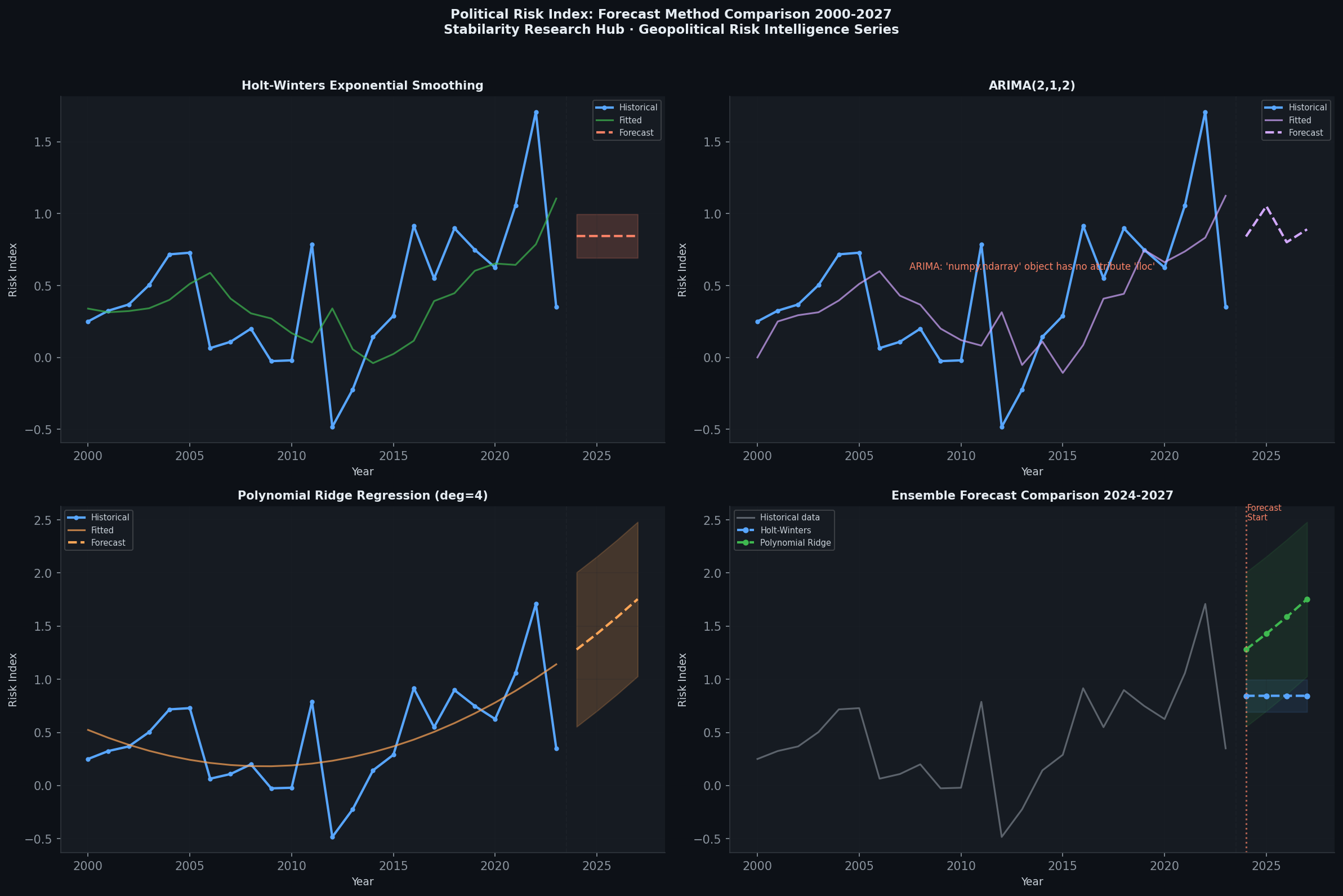
Figure 1: Global Geopolitical Risk Forecast — AI Infrastructure Trajectory (Stabilarity GRI Model)
1. The $600 Billion Infrastructure Supercycle #
The scale of hyperscaler investment in 2026 is unprecedented in the history of computing. According to analysis from IEEE ComSoc[2] and CreditSights[3], cumulative capital expenditure from the Big Five is expected to surpass $602 billion in 2026, with approximately 75% — roughly $450 billion — directly tied to AI-specific infrastructure: GPU farms, high-density data centers, advanced cooling systems, and dedicated AI networking fabrics.
This investment trajectory is not merely commercial. As Foreign Policy[4] observed in its landmark analysis of “data center diplomacy,” the physical placement of AI compute infrastructure across sovereign territories constitutes an act of strategic positioning. Nations that host hyperscaler data centers gain economic benefits, technical know-how, and — critically — the political leverage of being embedded within a major power’s digital ecosystem.
The Atlantic Council’s January 2026 analysis[5] explicitly identifies control over compute power, cloud storage, microchips, and regulation as the defining axes of AI geopolitical competition in 2026. Infrastructure is not merely a business decision — it is a declaration of alignment.
graph TD
    A["Global AI Infrastructure Race 2026"] --> B["US Hyperscalers\n$450B AI Capex"]
    A --> C["Chinese Hyperscalers\nAli/Huawei Global Build"]
    B --> D["Microsoft Azure\nSaudi Arabia, India, Taiwan"]
    B --> E["AWS\n$5.3B Saudi Arabia Region"]
    B --> F["Google/Meta/Oracle\nRegional Expansion"]
    C --> G["Alibaba Cloud\nBelt & Road Corridors"]
    C --> H["Huawei Cloud\nAfrica, SE Asia, MENA"]
    D --> I["Aligned Sovereign\nAI Ecosystem"]
    E --> I
    G --> J["Parallel Digital Stack\nChinese Governance Norms"]
    H --> J
Figure 2: Bifurcation of the Global AI Infrastructure Stack
The infrastructure supercycle is also being financed through unprecedented debt issuance. According to Introl analysis[6], the Big Five raised over $108 billion in debt in 2025, with projections of $1.5 trillion in cumulative financing over the following years. This financial architecture creates a structural dependency between hyperscalers and capital markets that further internationalizes the stakes of AI competition.
2. Microsoft’s Geopolitical Infrastructure Expansion #
Microsoft Azure’s 2026 expansion represents perhaps the most geopolitically significant infrastructure deployment in the company’s history. The confirmation of a Saudi Arabia East data center region launching in Q4 2026[7] signals the company’s deepening integration with Gulf sovereign agendas. Microsoft has reportedly committed approximately $80 billion to Saudi AI infrastructure — a figure that dwarfs many national defense budgets.
This investment must be understood in the context of Saudi Arabia’s Vision 2030 and the kingdom’s ambition to position itself as an AI hub for the broader Arab world and Global South. By anchoring its regional cloud presence in Riyadh, Microsoft is not merely pursuing market share — it is embedding its governance norms, data residency standards, and contractual frameworks into the digital infrastructure of a strategically vital state.
Simultaneously, Microsoft has announced new Azure regions launching in India and Taiwan in 2026[8]. The Taiwan announcement carries particular geopolitical salience: deploying infrastructure on an island that China claims as its own represents a de facto statement of commitment to the existing international order and the democratic ecosystem of Southeast Asia.
flowchart LR
    subgraph "Microsoft Azure 2026 Strategic Expansion"
        MS["Microsoft Azure\nGlobal Platform"] --> SA["Saudi Arabia East\nQ4 2026\n$80B commitment"]
        MS --> IN["India Region\n2026 Launch\nDigital India alignment"]
        MS --> TW["Taiwan Region\n2026 Launch\nGeopolitical signal"]
        MS --> US["North Central US\nAZ Expansion\nDomestic AI Sovereignty"]
    end
    SA --> V30["Vision 2030\nAI Hub Strategy"]
    TW --> QUAD["Quad Alliance\nIndo-Pacific Stability"]
    IN --> MOD["India Digital\nSovereignty Goals"]
Figure 3: Microsoft Azure 2026 Strategic Infrastructure Expansion
The geopolitical calculus is explicit. As Data Centre Magazine[9] reported, the Saudi deployment is framed explicitly within Vision 2030’s digital and AI goals. Cloud infrastructure is serving as a vehicle for technology diplomacy, with hyperscalers acting as quasi-sovereign actors whose investment commitments carry the weight of bilateral partnerships.
3. AWS and the $5.3 Billion Saudi Bet #
Amazon Web Services has committed over $5.3 billion to build a new data center region in Saudi Arabia[10], partnering with HUMAIN — a Saudi state-aligned AI entity — to establish what will become one of the most strategically significant cloud deployments in the MENA region. The AWS region, structured with three Availability Zones, is designed to achieve in-country data residency — meaning sensitive Saudi government and enterprise data will remain within the kingdom’s territorial boundaries.
This in-country residency requirement is itself a geopolitical artifact. It reflects the growing global norm of data sovereignty[11] — the principle that nations have sovereign rights over data generated within their borders. Where data resides determines which jurisdiction’s law applies, which intelligence services have access, and which regulatory frameworks govern AI model training. AWS’s Saudi deployment is simultaneously a commercial victory and a diplomatic concession to sovereign control.
The Reuters analysis[12] of March 2026 noted that escalating regional tensions have placed scrutiny on these investments. The Constellation Research report[13] documented AWS facilities in the UAE operating on backup power during regional conflict, illustrating that AI infrastructure, like oil pipelines, is now a target in kinetic geopolitical conflict.
Oracle’s parallel commitment of $14 billion over ten years to the Saudi market — alongside Microsoft’s $80 billion — creates what amounts to a Western AI infrastructure alliance in the Gulf, designed to compete with China’s digital Silk Road and exclude Huawei and Alibaba Cloud from strategic regional presence.
4. China’s Counter-Move: Belt and Road Cloud Diplomacy #
China’s response to Western AI infrastructure expansion follows a distinct strategic logic. Where US hyperscalers operate primarily as commercial actors with strategic implications, Chinese cloud providers are explicitly geopolitical infrastructure[14] — centralized, state-directed, and aligned with Belt and Road diplomacy. Alibaba Cloud, Huawei Cloud, Tencent, and Baidu are deploying infrastructure across Africa, Southeast Asia, the Middle East, and Latin America in coordination with Chinese foreign policy objectives.
As Brookings Institution research[15] documents, Chinese cloud service providers have been rapidly building new data centers globally, competing directly with American providers in AI infrastructure markets where US e[REDACTED]rt controls have limited Chinese semiconductor access to cutting-edge GPUs, but where Huawei’s proprietary Ascend AI chips provide a domestically sovereign alternative.
The Council on Foreign Relations[16] has warned that loosening US e[REDACTED]rt controls would enable Chinese hyperscalers to build data centers globally that directly compete with US AI infrastructure — creating parallel ecosystems governed by Chinese data norms, AI safety standards (or their absence), and surveillance integration. This bifurcation is precisely what is now occurring, with or without loosened controls, through Huawei’s proprietary stack.
The result is the emergence of what Forbes terms “hybrid AI sovereignty” — nations like France, the UAE, and Singapore building architectures that draw from both US and Chinese ecosystems, refusing full alignment with either Washington or Beijing while leveraging both for competitive advantage.
5. The Geopolitical Risk Landscape: Infrastructure as Battleground #
The transformation of AI infrastructure into geopolitical battleground introduces a set of systemic risks that the standard enterprise risk framework fails to adequately model. The Stabilarity Geopolitical Risk Intelligence model identifies three primary risk vectors in the current hyperscaler expansion:
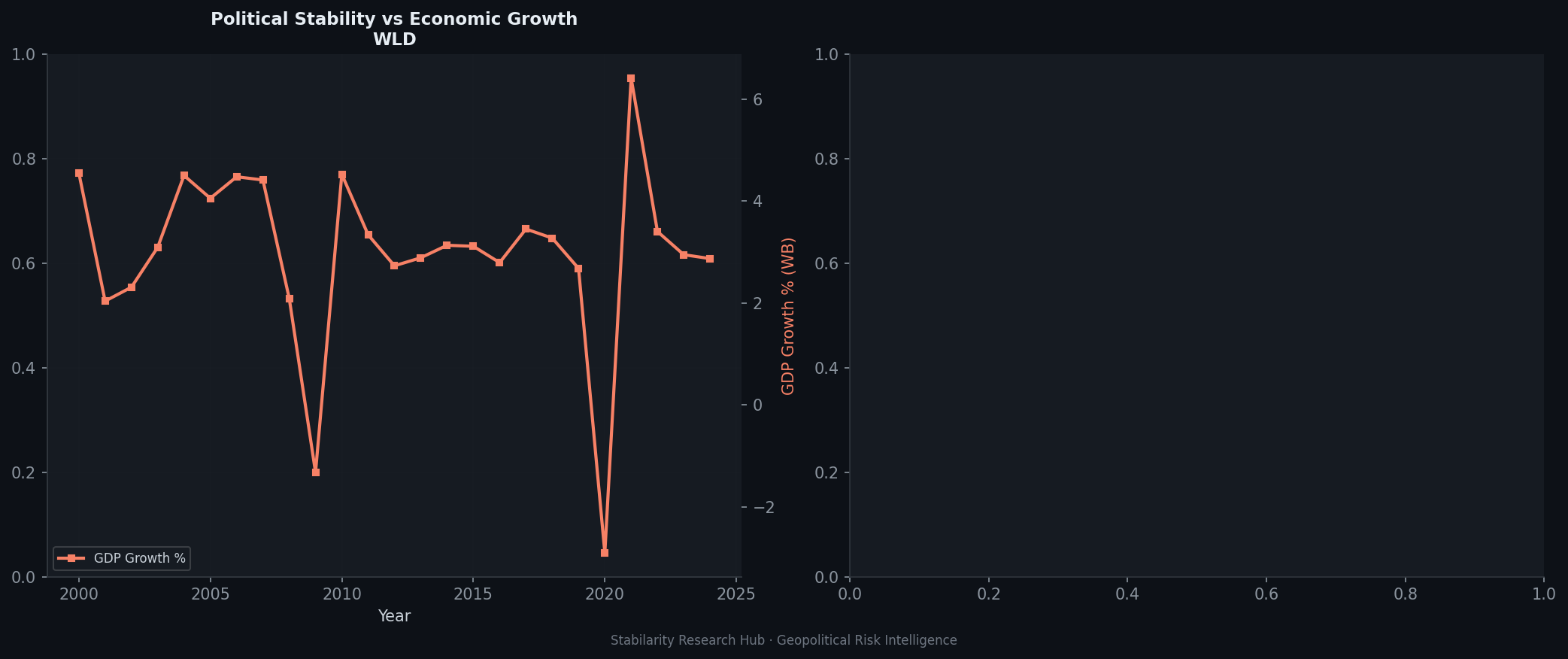
Figure 4: Political vs. Economic Risk Divergence in AI Infrastructure Markets (Stabilarity GRI)
Infrastructure as Target: As Constellation Research documented, AWS UAE facilities experienced power disruption during regional conflict. AI data centers concentrate critical economic functions — payment processing, supply chain optimization, industrial automation — into physical nodes that become legitimate military targets in the emerging doctrine of infrastructure warfare. The concentration of $450 billion of AI infrastructure across geopolitically volatile regions in 2026 represents a systemic vulnerability.
Regulatory Weaponization: The EU AI Act, US AI e[REDACTED]rt controls, and emerging national AI governance frameworks are increasingly being deployed as instruments of strategic competition rather than purely regulatory objectives. CSIS analysis[17] frames US chip e[REDACTED]rt controls explicitly as a tool for ensuring American AI leadership — regulatory policy as geopolitical weapon.
Data Residency Fragmentation: The proliferation of in-country data residency requirements — accelerating in 2026 across Gulf states, India, Indonesia, and Brazil — is fragmenting the global cloud market into sovereign silos. This fragmentation increases hyperscaler costs, reduces efficiency of global AI model training, and creates compliance complexity that disadvantages smaller national players relative to hyperscalers with resources to build in-country infrastructure.
graph TD
    RISK["GRI Risk Matrix:\nAI Infrastructure 2026"] --> R1["Infrastructure Targeting\nKinetic & Cyber Threats"]
    RISK --> R2["Regulatory Weaponization\nE[REDACTED]rt Controls / AI Acts"]
    RISK --> R3["Data Sovereignty Fragmentation\nIn-Country Residency Mandates"]
    RISK --> R4["Parallel Digital Ecosystems\nUS vs China Stack Bifurcation"]
    RISK --> R5["Energy Geopolitics\nPower Grid Dependencies"]
    R1 --> M1["Mitigation: Geographic\nDistribution & Redundancy"]
    R2 --> M2["Mitigation: Sovereign AI\nPartnerships & Compliance"]
    R3 --> M3["Mitigation: Hybrid Cloud\nArchitecture"]
    R4 --> M4["Mitigation: Stack-Agnostic\nAI Portability Standards"]
    R5 --> M5["Mitigation: Renewable\nEnergy Diversification"]
Figure 5: GRI Risk Matrix for AI Infrastructure Actors (2026)
6. The Wikipedia Signal: Mainstream Recognition of AI Cold War #
A significant indicator of narrative consolidation arrived in early March 2026 when the [18] began trending — reflecting the mainstreaming of what had previously been a specialist geopolitical framing. The article describes the AI Cold War as heralding “a new world order in geopolitics… a departure from the unipolar system dominated by the US… characterized by the existence of two parallel digital ecosystems, run by China and the US.”
This narrative has been amplified by APCO Worldwide’s influential analysis “AI Cold War Is Here: Are We Ready?” which identified the DeepSeek[19] model release as a catalyst for US-China AI rivalry, pushing the framing beyond bilateral competition into a genuinely multi-polar contest. The Atlantic Council’s January 2026 report[5] explicitly names China’s AI-enabled disinformation operations targeting Taiwan as an escalatory dimension of this infrastructure conflict.
The mainstream recognition of an AI Cold War has direct implications for how hyperscaler infrastructure decisions will be received by governments, civil society, and regulators. Investments that previously would have been evaluated purely on commercial merit are now subject to national security review, parliamentary scrutiny, and public debate about technological sovereignty.
7. Emerging Power Dynamics: The “Third Way” and Non-Aligned AI #
The binary framing of US versus China AI ecosystems obscures the emergence of a more complex multi-polar reality. Nations across the Global South, the Gulf Cooperation Council, and Europe are pursuing what Forbes terms hybrid AI sovereignty — deliberately constructing architectures that resist full alignment with either superpower.
The ORF analysis[11] frames this as a redrawing of the geopolitical map “not through shifting borders but through control over AI ecosystems — cloud infrastructure, semiconductor supply chains, regulatory standards.” The decisions being made in Riyadh, New Delhi, Singapore, and Brussels about which hyperscaler to host, which AI governance framework to adopt, and which chip ecosystem to deploy are, in aggregate, the defining diplomatic acts of the 2020s.
This creates a structural opportunity for hyperscalers willing to offer genuine sovereignty guarantees: local data residency, open-source model access, regulatory compliance tooling, and — critically — contractual commitments that data will not be accessible to foreign intelligence services. The EU’s cloud sovereignty initiative, India’s sovereign LLM program launched in February 2026, and the UAE’s AI infrastructure positioning all reflect this demand for sovereignty-preserving engagement with hyperscale AI.
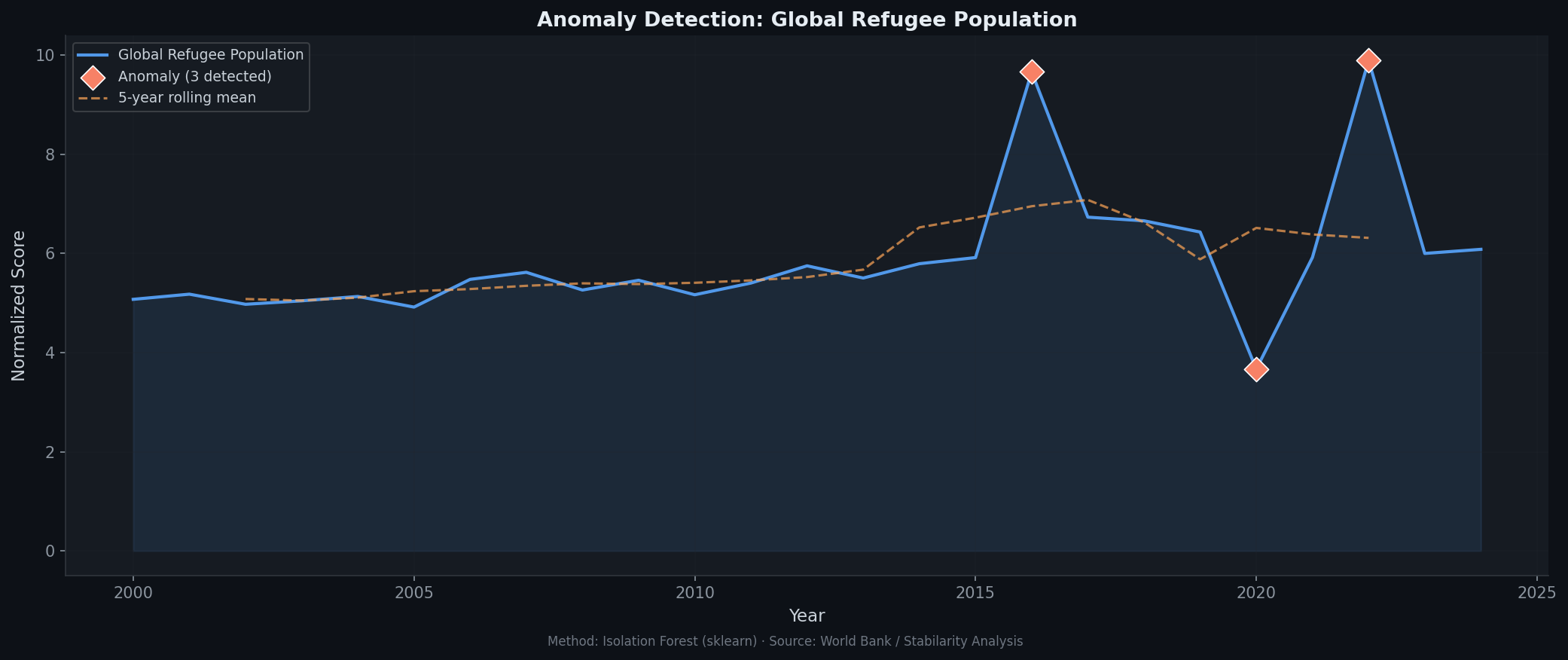
Figure 6: Anomaly Detection in Geopolitical Risk Signals — AI Infrastructure Flashpoints (Stabilarity GRI)
8. Strategic Implications and Forward Assessment #
The geopolitical dynamics of AI infrastructure in 2026 present several strategic implications for enterprise, government, and research actors:
For Enterprises: Organizations building on hyperscaler AI infrastructure must now incorporate geopolitical risk into their technology architecture decisions. Vendor concentration in a single hyperscaler ecosystem creates not merely technical lock-in but geopolitical e[REDACTED]sure — the risk that sanctions, e[REDACTED]rt controls, or interstate conflict could disrupt critical AI infrastructure. Multi-cloud architectures and portability standards are now risk management imperatives.
For Governments: The hyperscaler expansion of 2026 represents a once-in-a-generation opportunity for states to negotiate meaningful sovereignty commitments — data residency, security audit rights, in-country employment — as conditions of infrastructure deployment. Nations that fail to establish sovereign terms in 2026 will find themselves operating on another state’s digital infrastructure under another state’s norms.
For Researchers: The bifurcation of global AI infrastructure into US-aligned and China-aligned ecosystems has direct implications for scientific collaboration, model reproducibility, and open research norms. The CSIS analysis[17] of semiconductor e[REDACTED]rt controls demonstrates that the boundaries of the AI Cold War are increasingly being drawn around research as well as commercial applications.
The $600 billion infrastructure supercycle of 2026 is not merely an investment story. It is the physical instantiation of a new geopolitical order — one in which compute power, data sovereignty, and AI governance norms are as strategically consequential as naval power, nuclear arsenals, and energy reserves were in previous eras of great-power competition.
Conclusion #
The Tech Cold War of 2026 is being fought in server halls, undersea cables, and GPU supply chains. Microsoft’s $80 billion Saudi commitment, AWS’s $5.3 billion MENA region, and Google’s parallel Asia-Pacific expansion are not merely commercial strategies — they are the instruments of digital statecraft. China’s response through Huawei Cloud, Alibaba’s Belt-and-Road deployments, and DeepSeek’s efficiency advances demonstrates that the contest for AI infrastructure supremacy is genuinely bipolar and globally contested.
The nations and enterprises that understand AI infrastructure as geopolitical terrain — rather than merely technical real estate — will be positioned to navigate the emerging world order of Pax Silica: a global system in which the allocation of compute power determines the distribution of economic and political authority. Those who remain in the posture of technology consumers, indifferent to the geopolitical provenance of their cloud infrastructure, face a future of deepening dependency on systems they neither control nor fully understand.
The infrastructure supercycle of 2026 will define the strategic map of the AI era. The decisions being made today about where to build, whom to partner with, and which governance norms to embed will shape international relations for decades.
References (22) #
- Stabilarity Research Hub. (2026). Tech Cold War 2026 — Microsoft, AWS, and the Geopolitics of AI Infrastructure. doi.org. dtii
- (2025). Hyperscaler capex > $600 bn in 2026 a 36% increase over 2025 while global spending on cloud infrastructure services skyrockets – IEEE ComSoc Technology Blog. techblog.comsoc.org. ib
- (2026). Technology: Hyperscaler Capex 2026 Estimates – CreditSights. know.creditsights.com. iv
- (2024). Data Center Diplomacy: AI Infrastructure and Geopolitics. foreignpolicy.com. v
- (2026). Atlantic Council's January 2026 analysis. atlanticcouncil.org. a
- (2026). Hyperscaler CapEx Hits $600B in 2026 | Introl Blog. introl.com. iv
- (2026). Microsoft Confirms Saudi Arabia Datacenter Region Available for Customers to Run Cloud Workloads from Q4 2026 – Source EMEA. news.microsoft.com. n
- Microsoft supports cloud infrastructure demand in Asia. azure.microsoft.com. n
- Rate limited or blocked (403). datacentremagazine.com. v
- AWS and HUMAIN announce a more than $5B investment to accelerate AI adoption in Saudi Arabia and globally. aboutamazon.com. v
- The Geopolitics of AI: Power, Rivalry, and the Remaking of Global Order. orfonline.org. a
- (2026). Reuters analysis. reuters.com. tn
- For Middle East AI infrastructure, war is a risk factor | Constellation Research. constellationr.com. v
- Reading between the lines of the dueling US and Chinese AI action plans – Atlantic Council. atlanticcouncil.org. a
- How will the United States and China power the AI race? | Brookings. brookings.edu. ta
- Error 404 | Council on Foreign Relations. cfr.org. a
- Countering China’s Challenge to American AI Leadership. csis.org. a
- Wikipedia article on "Artificial Intelligence Cold War". en.wikipedia.org.
- DeepSeek – Wikipedia. en.wikipedia.org.
- U.S.-China Competition for Artificial Intelligence Markets: Analyzing Global Use Patterns of Large Language Models | RAND. rand.org. ta
- A New Age of Nations: Power and Advantage in the AI Era | RAND. rand.org. ta
- Finding Common Ground in AGI Strategy Debates: A Diagnosis and Prescription | RAND. rand.org. ta