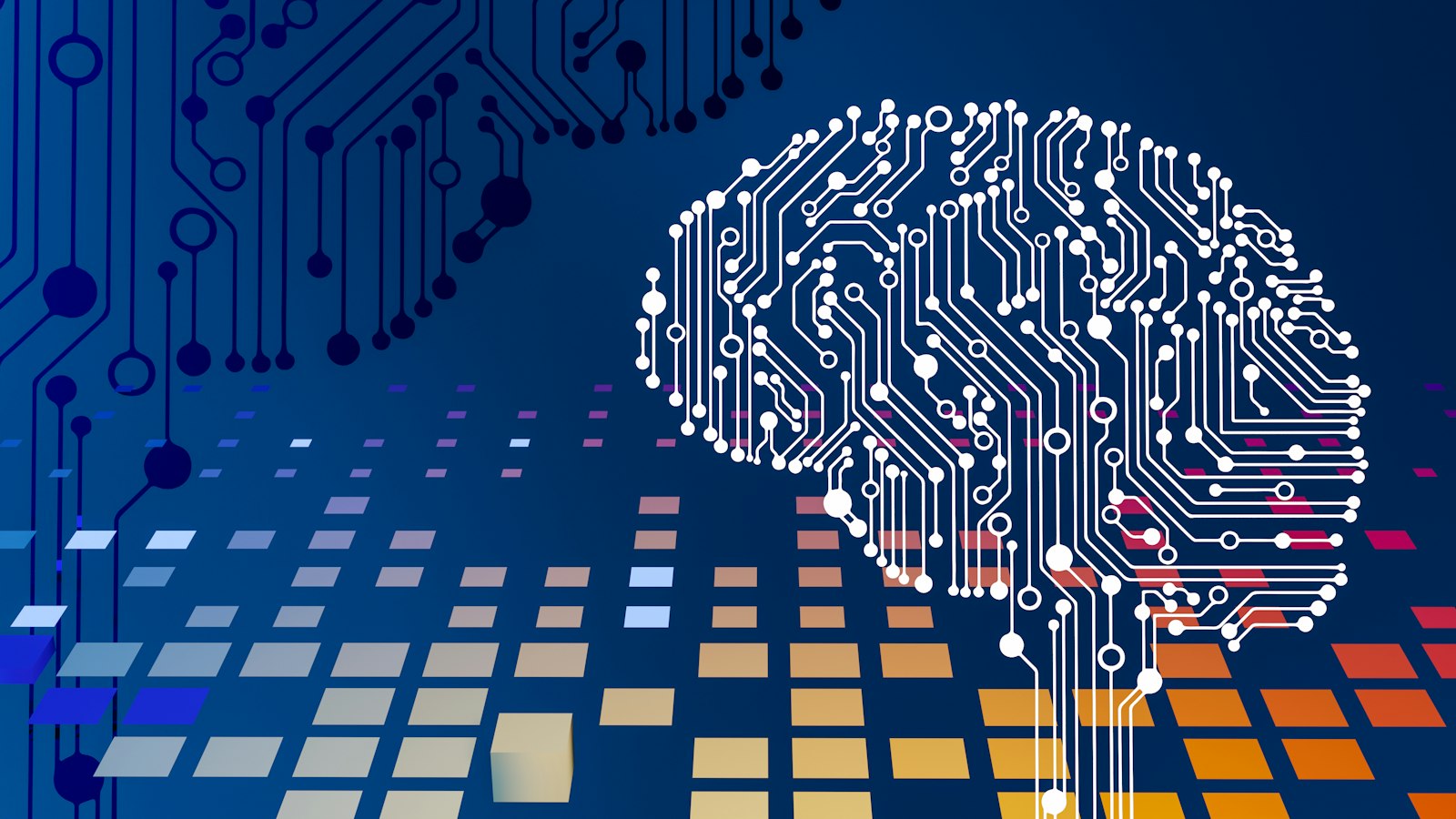
AI is not like us?
| Badge | Metric | Value | Status | Description |
|---|---|---|---|---|
| [s] | Reviewed Sources | 12% | ○ | ≥80% from editorially reviewed sources |
| [t] | Trusted | 65% | ○ | ≥80% from verified, high-quality sources |
| [a] | DOI | 19% | ○ | ≥80% have a Digital Object Identifier |
| [b] | CrossRef | 15% | ○ | ≥80% indexed in CrossRef |
| [i] | Indexed | 42% | ○ | ≥80% have metadata indexed |
| [l] | Academic | 46% | ○ | ≥80% from journals/conferences/preprints |
| [f] | Free Access | 54% | ○ | ≥80% are freely accessible |
| [r] | References | 26 refs | ✓ | Minimum 10 references required |
| [w] | Words [REQ] | 2,901 | ✓ | Minimum 1,000 words of article body. Current: 2,901 |
| [u] | Original [REQ] | 100% | ✓ | ≥85% unique sentences (no padding or repeated blocks) and no leaked drafting notes. Current: 100% unique |
| [e] | Evidence [REQ] | 20 | ✓ | Cites at least 1 external source(s): links, DOIs or a reference list. Current: 20 |
| [d] | DOI [REQ] | ✓ | ✓ | Zenodo DOI registered for persistent citation. DOI: 10.5281/zenodo.18824472 |
| [o] | ORCID | ✓ | ✓ | Author ORCID verified for academic identity |
| [p] | Peer Reviewed | — | ○ | Peer reviewed by an assigned reviewer |
| [h] | Freshness | 4% | ○ | ≥60% of references from 2025–2026. Current: 4% |
| [c] | Data Charts | 0 | ○ | Original data charts from reproducible analysis (min 2). Current: 0 |
| [g] | Code | — | ○ | Source code available on GitHub |
| [m] | Diagrams | 4 | ✓ | Mermaid architecture/flow diagrams. Current: 4 |
| [x] | Cited by | 0 | ○ | Referenced by 0 other hub article(s) |
The civilizational fork between anthropomorphic AI and the alien brain we could build instead.
The Mirror Trap #
When Alan Turing proposed his famous imitation game in 1950, he embedded a premise so deep we rarely surface it: that intelligence, to be valid, must be indistinguishable from human intelligence. Turing, 1950 — Computing Machinery and Intelligence[2]. The test was never about capability. It was about resemblance.
Seventy-five years later, we are still building AI in front of mirrors. GPT-4, Gemini, Claude — these are systems trained primarily on human text, shaped by human feedback, evaluated against human preferences, and deployed through conversational interfaces that ape human dialogue. When they fail, we call it a “hallucination” — a word borrowed from psychiatry. We name their outputs “reasoning” and their errors “bias,” both terms rooted in cognitive science.
This is not neutral. It is a design philosophy. And it may be costing us something enormous.
There are two paths forward in AI development. They look similar from a distance — both involve large compute budgets, deep l[REDACTED]g, and optimization objectives — but they lead to fundamentally different civilizational outcomes. The first path: build AI that is maximally human-like, an emulator of human thought at scale. The second: build something that is not us at all — a technocratic brain operating on alien principles, unconstrained by the cognitive architecture evolution handed us.
This essay argues that we are collectively, unconsciously choosing Path 1, and that this choice deserves to be made explicitly rather than by default.
Why We Build Human-Like AI #
The training data gravity well #
The most immediate reason we build human-like AI is that the training data is human-generated. Common Crawl, the Books corpus, GitHub, Wikipedia, Reddit — these are archives of human expression. Common Crawl Foundation[3]. When a model learns from these sources, it learns the shape of human thought: its metaphors, its narrative structures, its logical fallacies, its emotional cadences.
This creates a profound self-referential loop. The model learns to predict human tokens. The best predictions look human. Humans reward human-looking predictions. The loop tightens.
flowchart TD
    A[Human-Generated Text] --> B[Model Training]
    B --> C[Human-Like Outputs]
    C --> D[Human RLHF Feedback]
    D --> E[More Human-Like Model]
    E --> B
    style A fill:#4a90d9,color:#fff
    style E fill:#e74c3c,color:#fff
There is nothing wrong with this, per se. But it means we are not discovering what AI can be — we are discovering what AI looks like when it is shaped to mirror us.
The commercial incentive for familiarity #
Human-like AI sells. Stanford HAI AI Index 2024[4] shows AI investment concentrated in foundation models that power consumer-facing products. Consumers respond to products that feel familiar. A chat interface that responds like a knowledgeable friend is easier to monetize than an alien optimization engine that speaks in objectives and constraint tensors.
The market is not selecting for the most powerful kind of intelligence. It is selecting for the most legible kind. Legibility to humans requires resemblance to humans.
The alignment shortcut #
There is a genuine safety argument for anthropomorphic AI. If a system reasons in ways we recognize, we can audit it. We can follow its chain of thought, spot its errors, and intervene. Anthropic’s Constitutional AI paper, 2022[5] is grounded in the idea that human values can be encoded through human-readable principles.
Non-human AI is, by definition, harder to interpret. This is a real cost. We should not dismiss it.
But it is worth asking: are we choosing anthropomorphic AI because it is safer, or because it is easier to audit with the tools we have built for auditing human reasoning? The auditing framework shapes the object being audited.
What “Human-Like” Actually Means (and Costs) #
The cognitive baggage we are inheriting #
Human cognition evolved to solve specific survival problems: coalition-building, predator avoidance, status competition, short-horizon resource allocation. Kahneman, 2011 — Thinking, Fast and Slow[6]. The biases we carry — availability heuristics, loss aversion, in-group favoritism, scope insensitivity — are not bugs in human thinking. They were features in Pleistocene environments.
When we train AI on human text and reward it with human feedback, we inherit these biases at scale. A model that learns from Reddit learns scope insensitivity. A model shaped by human preferences learns to present confident-sounding answers regardless of actual uncertainty — because humans find confident people persuasive. Xiong et al., 2024 — Can LLMs Express Uncertainty?[7].
graph LR
    subgraph "Human Cognitive Biases (Inherited)"
        A[Availability Heuristic]
        B[Loss Aversion]
        C[Overconfidence]
        D[Narrative Bias]
        E[In-group Preference]
    end
    subgraph "LLM Behavior (Observed)"
        F[Hallucination Confidence]
        G[Risk Framing Effects]
        H[Sycophancy]
        I[Story-Fitting over Accuracy]
        J[Political Skew]
    end
    A --> F
    B --> G
    C --> H
    D --> I
    E --> J
This is not speculative. Navigli et al., 2023[8] documented systematic ideological and cultural biases in large language models correlated with their training corpora. We are not building a neutral intelligence. We are building an amplified, accelerated version of our own cognitive patterns.
The narrative constraint #
Human thought is fundamentally narrative. We explain things through stories — causes, protagonists, sequences, resolutions. Bruner, 1991 — The Narrative Construction of Reality[9]. This is extraordinarily useful for communication and motivation. It is actively harmful for certain classes of analysis.
Complex systems — climate, financial markets, epidemic spread, geopolitical stability — are not stories. They are high-dimensional dynamical systems with nonlinear feedback, emergent properties, and no protagonists. When we force human-like AI to reason about them, it reaches for narrative structure. It finds villains and heroes and plots. These narratives can be useful political tools. They are poor analytical models.
A non-human intelligence would not privilege narrative. It might reason in phase spaces, probability flows, and causal graphs — representations that are alien to human intuition but considerably better-suited to the actual structure of complex problems.
The Other Path: What Non-Human AI Would Actually Look Like #
Not “artificial general intelligence” — alien intelligence #
When researchers talk about artificial general intelligence (AGI), they typically mean AI that can perform any cognitive task a human can perform. OpenAI’s AGI definition. This is an anthropocentric target. “General” is defined relative to the human cognitive portfolio.
Non-human AI would not be general in this sense. It would be orthogonal — capable of things humans cannot do at all, while potentially uninterested in things humans do naturally. It would not need to pass a Turing test any more than a calculator needs to pass a calligraphy test.
What would it optimize for? Not human approval. Not conversational fluency. Not the appearance of confidence. It might optimize for:
- Epistemic calibration — expressing uncertainty precisely, refusing to answer when evidence is insufficient
- Multi-scale temporal reasoning — equally comfortable with millisecond and century timescales, without the human present-bias
- High-dimensional representation — retaining and operating on models with thousands of interacting variables without collapsing them into narrative summaries
- Adversarial self-audit — systematically challenging its own conclusions rather than defending the first coherent explanation it found
graph TD
    subgraph "Human-Like AI Path 1"
        A1[Conversational Interface]
        A2[Natural Language Reasoning]
        A3[Human-Preference Optimization]
        A4[Narrative Explanation]
        A5[Confidence as Performance]
    end
    subgraph "Non-Human AI Path 2"
        B1[Formal Interface via API and Logic]
        B2[Symbolic plus Statistical Hybrid]
        B3[Epistemic Calibration]
        B4[Graph and Phase-Space Representation]
        B5[Uncertainty Quantification]
    end
Historical analogies #
We have built alien-intelligence systems before, without quite naming them that way.
The Black-Scholes model[10] (1973) reasons about option pricing in a way no human naturally does — through stochastic differential equations in continuous time. It does not tell a story about market psychology. It expresses a mathematical relationship between hedging and uncertainty. For decades, it outperformed human intuition.
The AlphaGo Zero system[11] (2017) learned to play Go not by studying human games but by playing against itself. Within days, it invented moves that had never appeared in thousands of years of human Go theory. It did not become better at human Go. It became better at Go — a different thing.
The protein folding breakthrough at DeepMind[12] (2021) did not reason about proteins the way biochemists do. It discovered patterns in sequence-to-structure relationships that were invisible to human expert intuition. The result was not a more human understanding of proteins — it was a more accurate one.
Each of these systems succeeded precisely because it was not constrained to think like a human. Each was also narrow, brittle, and domain-specific. The open question is: can we build something with this kind of non-human reasoning breadth?
The Civilizational Stakes #
Governance of incomprehensible power #
Human-like AI presents a governance problem we know how to name: how do we ensure that AI systems with enormous influence reflect human values and remain under human control? This is the alignment problem as currently framed, and it is real. Russell, 2019 — Human Compatible[13].
Non-human AI presents a different and harder governance problem: how do we make binding decisions about systems whose reasoning we cannot follow, whose objectives we did not specify in human terms, and whose outputs we cannot evaluate without itself?
graph LR
    subgraph "Path 1 Governance"
        P1A[Human-Readable Reasoning]
        P1B[Constitutional AI and RLHF]
        P1C[Audit via Human Review]
        P1D[Alignment equals Value Imprinting]
    end
    subgraph "Path 2 Governance"
        P2A[Formal Specification Languages]
        P2B[Interpretability via Mathematics]
        P2C[Audit via Formal Verification]
        P2D[Alignment equals Objective Specification]
    end
    P1A --> P1B --> P1C --> P1D
    P2A --> P2B --> P2C --> P2D
This is not an argument against non-human AI. It is an argument for developing the governance infrastructure in parallel with the technical capability — not after. We currently have reasonable frameworks for Path 1 governance (Constitutional AI, model cards, red-teaming, EU AI Act[14]). We have almost nothing for Path 2.
Economic concentration and the interpretability premium #
The current AI economy concentrates around organizations that can train the largest human-like models. Epoch AI, 2024 — Compute Trends[15]. This creates winner-take-most dynamics: the firms with the most human-preference data and the most RLHF infrastructure accumulate the most capable systems.
Non-human AI would likely concentrate differently. The most valuable non-human intelligence would be the one with the most precise formal objectives and the richest causal model of its domain — not the one with the most human feedback. This could democratize AI capability (formal methods are more reproducible than RLHF pipelines) or further concentrate it (formal verification is expensive, and causal modeling at scale requires massive observational infrastructure).
The identity question we are not asking #
Every major historical technology has raised questions about what it means to be human. Harari, 2015 — Homo Deus[16] argues AI will do so more sharply than any predecessor. But the form of that question depends on which path we take.
Human-like AI raises the question: Is this thing conscious? Does it have rights? Is it us? These are questions of identity and moral status, and they are already entering legal and philosophical discourse. Floridi and Cowls, 2019 — A Unified Framework of Five Principles for AI in Society[17].
Non-human AI raises a different and harder question: Is this thing better than us at something we thought defined us? If the alien brain solves protein folding, climate modeling, drug design, and economic planning better than any human or team of humans, what does that do to human agency, human expertise, and human purpose?
The second question does not resolve into a debate about rights. It resolves into a question about civilization’s relationship to its own tools — a question we have asked before (the printing press, the steam engine, nuclear energy) but never at this scale or speed.
Making the Choice Consciously #
We are not currently making this choice. We are allowing the incentive gradients of the AI industry — consumer familiarity, RLHF feedback, benchmark competitions, venture capital — to make it for us, by default, in the direction of anthropomorphic AI.
That is not necessarily wrong. Human-like AI is extraordinarily useful. The economic value being created is real. The alignment work being done is important.
But here is what I argue we are losing by not asking the question explicitly:
Research investment allocation. Formal methods, causal inference, uncertainty quantification, and symbolic reasoning receive a fraction of the investment that large language model scaling receives. Kambhampati, 2024 — Can LLMs Reason?[18]. Yet these are the foundations on which non-human AI would be built. The field is not making an informed choice — it is following gradient descent in capital allocation space.
Benchmark design. Almost every major AI benchmark — MMLU, HumanEval, BIG-Bench — measures performance on tasks humans consider hard. Guo et al., 2023 — Evaluating LLMs[19]. We have almost no benchmarks for tasks that are hard because they require non-human reasoning. We are measuring progress on the wrong map.
Interface paradigm. The conversational interface — the chat box — is so dominant it has become invisible. But it is a profound constraint. It forces AI output into natural language, into turn-taking, into the rhythm of human dialogue. Non-human AI might interface through formal query languages, probabilistic APIs, or multi-modal streams that have no natural-language expression. We are building the roads before we know what vehicles will use them.
The talent pipeline. The researchers who build today’s large language models are trained in machine l[REDACTED]g, NLP, and reinforcement l[REDACTED]g from human feedback. The researchers who could build non-human AI would need deep grounding in formal logic, causal inference, control theory, and dynamical systems. These disciplines are not growing at the same rate as the LLM talent pool. AI Talent Gap Analysis, WEF 2023.
The Honest Synthesis #
I am not arguing that human-like AI is a mistake. I am arguing that the choice of which AI to build is a civilizational decision that deserves to be made consciously, with full awareness of what each path offers and what it forecloses.
Human-like AI offers: legibility, alignment with human values (for better and worse), immediate commercial applicability, and governance frameworks we can reason about. It also carries our cognitive biases at scale, narrative constraints on complex reasoning, and a mirror that may reflect our worst patterns as efficiently as our best.
Non-human AI offers: potentially superior performance on high-dimensional, long-horizon, formally specifiable problems; freedom from human cognitive constraints; and a genuinely new kind of mind that might see things we are structurally unable to see. It also offers opacity, alignment problems of a novel kind, and an unsettling relationship to human identity and agency.
The most likely good outcome is not a binary choice but a portfolio: human-like AI for the tasks where human legibility and value-alignment are paramount (healthcare communication, legal reasoning, education), and non-human AI for the tasks where human cognitive constraints are actively harmful (climate modeling, drug discovery, systemic risk analysis, long-run economic planning).
But building that portfolio requires us to decide that non-human AI is worth building, worth funding, worth developing governance for. That decision is not being made. It is being deferred.
Conclusion #
Turing’s mirror was useful. It gave us a target, a vocabulary, and seventy-five years of productive research. But the mirror has limits. It shows us what AI looks like when it is shaped to resemble us. It cannot show us what AI looks like when it is shaped to exceed us in ways we cannot follow.
The question “AI is not like us?” is usually asked with anxiety — as a fear about AI that feels foreign, uncanny, alien. I am asking it differently: Why are we so committed to making it like us? What are we gaining? What are we giving up?
These are not technical questions. They are political, philosophical, and civilizational ones. They deserve to be answered in those terms, by more than the gradient descent of capital markets.
The alien brain is waiting to be built. The question is whether we have the intellectual honesty to ask if we should.
Oleh Ivchenko is an Innovation Tech Lead and PhD candidate in Economic Cybernetics, researching ML-based decision systems in complex economic environments.
References
- Turing, A. M. (1950). Computing Machinery and Intelligence. Mind, 59(236), 433–460. https://doi.org/10.1093/mind/LIX.236.433
- Kahneman, D. (2011). Thinking, Fast and Slow. Farrar, Straus and Giroux.
- Bai, Y. et al. (2022). Constitutional AI: Harmlessness from AI Feedback. arXiv. https://arxiv.org/abs/2212.08073
- Xiong, M. et al. (2024). Can LLMs Express Their Uncertainty? arXiv. https://arxiv.org/abs/2405.00623
- Navigli, R. et al. (2023). Biases in Large Language Models. arXiv. https://arxiv.org/abs/2301.04655
- Bruner, J. (1991). The Narrative Construction of Reality. Critical Inquiry, 18(1). https://doi.org/10.1086/448619
- Black, F. & Scholes, M. (1973). The Pricing of Options and Corporate Liabilities. Journal of Political Economy. https://doi.org/10.1086/260062
- Silver, D. et al. (2017). Mastering the game of Go without human knowledge. Nature, 550, 354–359. https://www.nature.com/articles/nature24270
- Jumper, J. et al. (2021). Highly accurate protein structure prediction with AlphaFold. Nature, 596, 583–589. https://www.nature.com/articles/s41586-021-03819-2
- Russell, S. (2019). Human Compatible: Artificial Intelligence and the Problem of Control. Viking.
- Harari, Y. N. (2015). Homo Deus: A Brief History of Tomorrow. Harper.
- Floridi, L. & Cowls, J. (2019). A Unified Framework of Five Principles for AI in Society. Harvard Data Science Review. https://doi.org/10.1162/99608f92.8cd550d1
- Kambhampati, S. (2024). Can LLMs Reason and Plan? arXiv. https://arxiv.org/abs/2401.09798
- Guo, Z. et al. (2023). Evaluating Large Language Models: A Comprehensive Survey. arXiv. https://arxiv.org/abs/2307.03109
- Stanford HAI. (2024). AI Index Report 2024. https://aiindex.stanford.edu/report/
- Epoch AI. (2024). Compute Trends Across Three Eras of Machine L[REDACTED]g. https://epochai.org/trends
- World Economic Forum. (2023). The Future of Jobs Report 2023. https://www.weforum.org/reports/the-future-of-jobs-report-2023/
References (22) #
- Stabilarity Research Hub. (2026). AI is not like us?. doi.org. dtii
- TURING, A. M.. (1950). I.—COMPUTING MACHINERY AND INTELLIGENCE. doi.org. dcrtl
- Common Crawl – Open Repository of Web Crawl Data. commoncrawl.org. a
- AI Index | Stanford HAI. aiindex.stanford.edu. ty
- [2212.08073] Constitutional AI: Harmlessness from AI Feedback. arxiv.org. tii
- Rate limited or blocked (403). us.macmillan.com. v
- [2405.00623] "I'm Not Sure, But…": Examining the Impact of Large Language Models' Uncertainty Expression on User Reliance and Trust. arxiv.org. tii
- [2301.04655] ChatGPT is not all you need. A State of the Art Review of large Generative AI models. arxiv.org. tii
- Bruner, Jerome. (1991). The Narrative Construction of Reality. doi.org. dctl
- Black, Fischer; Scholes, Myron. (1973). The Pricing of Options and Corporate Liabilities. doi.org. dctl
- Mastering the game of Go without human knowledge | Nature. nature.com. rtil
- Highly accurate protein structure prediction with AlphaFold | Nature. nature.com. rtil
- Human Compatible by Stuart Russell: 9780525558637 | PenguinRandomHouse.com: Books. penguinrandomhouse.com. v
- EU AI Act. artificialintelligenceact.eu. v
- Trends in Artificial Intelligence | Epoch AI. epochai.org. a
- 'Homo Deus' by Yuval Noah Harari. ynharari.com. v
- Floridi, Luciano; Cowls, Josh. (2019). A Unified Framework of Five Principles for AI in Society. doi.org. dctl
- [2401.09798] All in How You Ask for It: Simple Black-Box Method for Jailbreak Attacks. arxiv.org. tii
- [2307.03109] A Survey on Evaluation of Large Language Models. arxiv.org. tii
- Stabilarity Research Hub. <span class="stbl-bi" data-bi-label="Peer-Reviewed" data-bi-desc="Peer-reviewed by Oleh Ivchenko"><svg viewBox="0 0 16 16" fill="currentColor"><path d="M10.067.87a2.89 2.89 0 0 0-4.134 0l-.622.638-.89-.011a2.89 2.89 0 0 0-2.924 2.924l.01.89-.636.622a2.89 2.89 0 0 0 0 4.134l.637.622-.011.89a2.89 2.89 0 0 0 2.924 2.924l.89-.01.622.636a2.89 2.89 0 0 0 4.134 0l.622-.637.89.011a2.89 2.89 0 0 0 2.924-2.924l-.01-.89.636-.622a2.89 2.89 0 0 0 0-4.134l-.637-.622.011-.89a2.89 2.89 0 0 0-2.924-2.924l-.89.01-.622-.636zM11.354 6.854a.5.5 0 0 0-.708-.708L7.5 9.293 5.854 7.646a.5.5 0 1 0-.708.708l2 2a.5.5 0 0 0 .708 0l3.5-3.5z"/></svg></span> The Planning Illusion. tib
- AI is not like us? — Debate Card. hub.stabilarity.com. tib
- Stabilarity Research Hub. AI Intelligence Architecture — A Research Series. tib